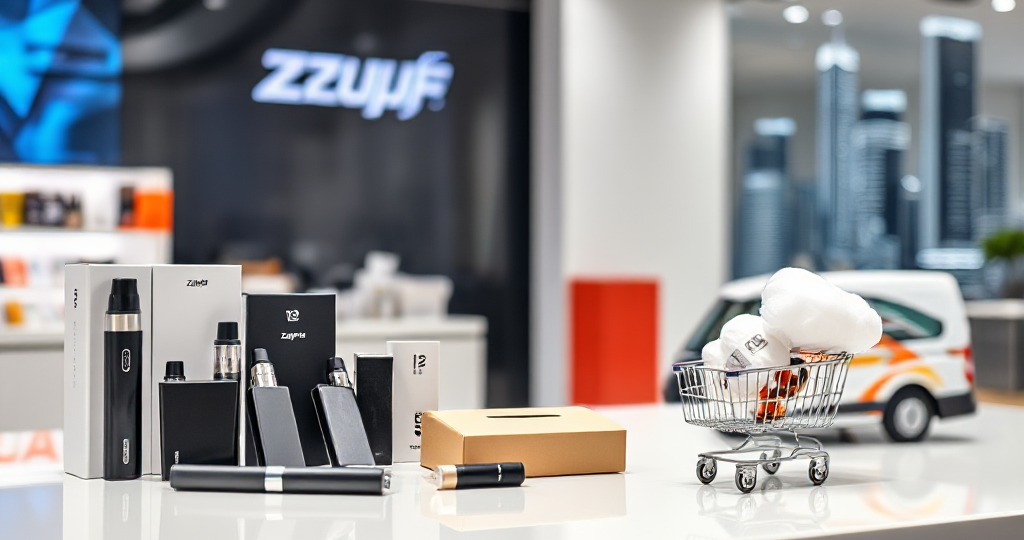

What Should You Check Before Buying a Lana Ultra 2?
A customer messages our support desk at 11 PM: the device worked beautifully for two days, then the draw went weak, the light blinked oddly, and now nothing happens. The first question I ask is never about the puff count or the flavour. It is always the same: where did you buy it, and what exactly was in the box? Nine times out of ten, the answer explains the problem before I even finish reading the message. That is why this piece is written as a set of mistake-and-correction pairs, drawn from real tickets I have handled, and focused on what you should verify before you spend money on a lana ultra 2 or any similar device. If you take nothing else away, take this: the seller and the packaging matter more than the spec sheet.
Mistake One: Trusting a Screenshot Instead of a Seller
The most common ticket I see starts with a screenshot. Someone found a listing on a social feed or a marketplace chat, the price looked reasonable, and the photo showed a sealed box. They paid, the item arrived, and something was off — a slightly different font on the label, a charging port that did not sit flush, or a serial number that did not match anything the brand publishes.
The correction is straightforward. Before you pay, confirm that the seller is a real retail operation with a visible storefront, a return policy, and a way to reach a human. Ask whether they ship locally and whether they offer cash on delivery. A seller who only accepts a transfer to a personal account and communicates through one chat app has no accountability once the money moves. A seller who publishes contact details, delivery terms, and product pages is a different category of risk entirely.
In Singapore specifically, buyers increasingly prefer cash on delivery because it lets them inspect the parcel before handing over money. That single habit eliminates most of the disputes I deal with. If a seller refuses COD and pressures you to pay first, treat that as information, not as an inconvenience.
Mistake Two: Assuming All High-Puff Devices Are Built the Same
The second mistake is treating every large-format disposable as interchangeable. They are not. Two devices with similar puff claims can differ in coil design, airflow, battery management, and how the e-liquid is stored. A device rated at 25,000 puffs and a device rated at 9,000 puffs are solving different problems for different users.
This is why I ask customers what they actually want before recommending anything. If you want something compact that fits a shirt pocket and lasts a few days, a smaller format makes sense. If you want to charge less often and carry one device instead of three, a larger format makes sense. The mistake is buying the biggest number on the shelf without asking how it behaves in daily use.
When customers ask me to compare formats, I point them to a few reference points so they can see the range: the marbo vape 25k for people who want a long-lasting daily device, and the lana pen plus 9k for people who prefer something lighter and more portable. Seeing them side by side usually settles the question faster than any spec comparison.
Mistake Three: Ignoring the Box, the Seal, and the Serial
Here is a ticket pattern I see weekly. A customer buys a device, uses it for a day, and then notices the box has no batch code, or the code does not match the sticker on the device. By then they have thrown away the receipt and the outer packaging.
The correction is to inspect before you discard anything. Check that the outer seal is intact, that the batch or serial information on the box matches the device, and that the printing is sharp rather than smudged. Keep the packaging until you are confident the device performs normally. If something fails in the first week, that packaging is your evidence.
This matters even more with higher-capacity devices because the cost per unit is higher. A defective large-format device is a bigger loss than a defective small one, and a seller who stands behind their stock will ask for exactly this information when you contact them.
Mistake Four: Charging With Whatever Cable Is Nearby
I cannot count how many tickets end with the phrase “I used my laptop charger.” Fast chargers push current a device was never designed to accept. The result is a battery that swells, a port that stops connecting, or a device that charges once and then never again.
The correction is boring but effective. Use the cable that came in the box, or a standard low-output USB source. Do not leave a device plugged in overnight on a high-wattage adapter. Do not charge it in a hot car. Do not use it while it is charging if the manufacturer advises against it.
Most of the “it died suddenly” tickets I handle are charging-related, not manufacturing-related. That is good news, because it means the failure was preventable. Treat the charging routine as part of the product, not as an afterthought.
Mistake Five: Buying From Whoever Is Cheapest This Week
Price shopping is rational until it becomes the only criterion. The cheapest listing is often the one with no local stock, no local returns, and no local support. When something goes wrong, you are negotiating across time zones with someone who has already been paid.
The correction is to weigh total cost, not sticker price. A slightly higher price from a seller who delivers quickly, accepts cash on delivery, and answers messages within a reasonable window is usually the better deal once you factor in the risk of a dead device and no recourse.
This is also where product range helps. A seller who carries multiple formats and brands — the lana pix 20k alongside other options — is more likely to have consistent sourcing than someone listing a single item they bought in bulk once. Range is a signal of an actual retail operation.
Mistake Six: Not Reading the Delivery and Returns Terms
Delivery terms are where most disputes are actually decided. If a seller promises same-day delivery but ships from overseas, the promise is not real. If a seller offers returns but excludes opened devices, you need to know that before you open the box, not after.
The correction is to read three things before ordering: where the stock ships from, how long delivery typically takes, and what the return window covers. Discreet packaging is also worth confirming if privacy matters to you, because not every seller handles it by default.
For buyers in Singapore, local stock and local delivery are the two factors that most often separate a smooth purchase from a frustrating one. A seller who holds inventory locally can resolve a problem in days. A seller who does not can leave you waiting weeks for a replacement that may never arrive.
Mistake Seven: Assuming Flavour Names Tell You Everything
Flavour descriptions are marketing, not specifications. Two devices with the same flavour name can taste noticeably different depending on the coil, the airflow, and how long the e-liquid has been sitting in stock. Freshness matters more than most buyers realise.
The correction is to ask about stock rotation if you are buying a flavour you already know you like. A seller who moves inventory quickly will generally have fresher product than one holding the same batch for months. If you are trying something new, buy one unit first rather than a multi-pack.
I often suggest customers start with a format they already trust and a flavour they already know, then branch out once they have a baseline. That approach turns flavour selection from a gamble into a comparison.
Mistake Eight: Skipping the Follow-Up When Something Feels Wrong
The final mistake is waiting. If a device tastes burnt on day one, leaks, or fails to charge, contact the seller immediately. Waiting two weeks weakens your position, especially if the return window is short.
The correction is to document the issue the day you notice it. Take a photo, note the batch code, and describe the problem clearly. Sellers who handle support tickets well will respond to a specific, factual message far faster than to a vague complaint.
If you are comparing options before your next purchase, it helps to look at a few well-known formats in one place so you can see how they differ: the marbo 25k for long sessions, the lana pix for a mid-sized daily device, and the snowwolf 16k for something in between. Seeing them listed together makes the trade-offs obvious.
A Short Summary of What Actually Matters
If you remember only a handful of points from this article, make them these. Buy from a seller you can reach and who stands behind their stock. Inspect the box, the seal, and the serial before you throw anything away. Charge with the right cable and avoid fast chargers. Read the delivery and return terms before you pay. And if something feels wrong, report it the same day.
None of this is complicated, but it is exactly the checklist that separates a smooth purchase from a support ticket. The device itself is only half the equation. The other half is the seller, the packaging, and the habits you bring to the purchase.
For buyers who also use heated tobacco products, it is worth noting that sourcing rules and availability differ by product category, and many shoppers compare options such as terea singapore listings alongside their vape purchases. The same principle applies: verify the seller, check the packaging, and keep your receipts.
Frequently Asked Questions
How do I know if a Lana Ultra 2 is genuine?
Check the outer seal, the batch or serial code on the box, and whether the code matches the device. Sharp printing, consistent fonts, and a seller who can answer basic questions about their stock are all good signs. If the price is dramatically lower than everywhere else, treat that as a warning rather than a bargain.
Is cash on delivery safer than paying upfront?
For most buyers, yes. Cash on delivery lets you inspect the parcel before money changes hands, which removes most of the risk of receiving the wrong item or a damaged device. It also gives you a natural point to refuse delivery if something looks wrong.
Why did my device stop working after a few days?
In most cases I handle, the cause is charging-related rather than a manufacturing defect. Fast chargers, overnight charging, and high heat are the usual culprits. If the device failed without any of those factors, contact the seller immediately and provide the batch code and a photo.
Should I buy one unit or a multi-pack?
Start with one unit, especially if it is a new flavour or a format you have not used before. Once you know how it performs in daily use, buying more makes sense. Multi-packs are better value only when you already trust the product and the seller.